
It shows that states would require a compensation to the tune of at least Rs 1.67 trillion in 2024-25, as none of them would be able to achieve a 14 per cent growth every year.

While experts pointed out the impact of corporation tax cuts cannot yet figure in collections as most companies are yet to decide on their choice, government officials said a part reason for slow collection is the tax cut.
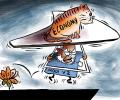
What could be the reason for the successive downward revisions across the board? Some key indicators make it evident, reports Abhishek Waghmare.

By November 3, only 17,000 applications with tax payable amounting to Rs 1,100 crore have been received by the government, under the Sabka Vishwas Legacy Dispute Resolution Scheme. The scheme gives a deep discount of 70 per cent for cases pending appeal where tax demand is more than Rs 50 lakh, and 50 per cent waiver beyond that amount.

Unemployment was worse only in the pre-demonetisation period, according to the data, at 9.6 per cent in August 2016.

Vidarbha had given as many as 44 seats to the BJP in 2014. The Congress and NCP, plus independents and smaller parties, snatched 19 seats from the BJP, reports Abhishek Waghmare.
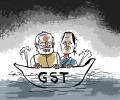
If the items and services such selected subsequently pass the test from the fitment committee and the GST Council, this would be the first of such rate hikes, after a series of cuts in the process of rate rationalisation that started in November 2017.

According to the global report, just 9.6 per cent of all children between 6 and 23 months of age are fed a minimum acceptable diet.

In the aftermath of the PMC Bank mess which was in the RBI's highest rating of 'A' category, trustworthiness of these ratings may be up for a review.

Business activity contracted in Q2 FY20, the first contraction since 2013-14 and the second since the 2008 global financial crisis, report, Abhishek Waghmare and Anup Roy.

If this turns into reality, India's gross domestic product (GDP) growth will be the lowest since 2012-13, which could severely hit job creation and income growth in the near term.

The immediate revenue loss could worsen the Centre's fiscal deficit, from the budgeted 3.3 per cent of gross domestic product (GDP) to 3.7 per cent of GDP -- a massive 40-basis-point increase. It was stabilised at 3.4 per cent since 2016-17, report Abhishek Waghmare and Dilasha Seth.

The fall in investment rate is not surprising. But putting it together with rising share of wages in GVA, it shows that the focus is more on productivity, rather than adding new capacity, says Pronab Sen, former chief statistician of India.

Over the years, start-ups are struggling more to garner funds as they pass the elementary stages of growth.
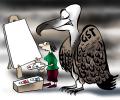
Experts said if the slowdown, and subsequent weakness in GST mobilisation, continued, it would curtail the Centre's resources to a considerable extent in the current financial year.

The dichotomy between richer and poorer states is largely in consonance with the diversity in state level disease burden in the country.

Credit to priority sectors as well as small and medium industries will be discussed to find ways to accelerate economic growth.

Maharashtra and Delhi lead the pack of states in terms of absolute number, with 142,425 and 125,937 closed companies, respectively.

Revenue foregone on account of corporation tax exemptions is estimated to grow by 16 per cent in 2018-19 (FY19) versus 8.7 per cent in the previous year and 12 per cent in 2016-17, show the Budget documents.
Nirmala Sitharaman has designed the revenue mix in such a way that while Centre's share in taxes would grow a massive 25 per cent, states' share would grow a dismal 6 per cent.
